 Email:nydia@aluminumhm.com
 Whatsapp:8618137889531
 Wechat:+86-18137889531

ASME seamless pipes are high-precision alloy seamless steel pipes conforming to the American Society of Mechanical Engineers (ASME) Boiler and Pressure Vessel Specification (BPVC). They are primarily used in demanding environments such as global energy, chemical, nuclear power, and deep-sea equipment, serving as a "core safety component" in high-end industrial fields. As a seamless steel pipe manufacturer specializing in exports, Haomei Aluminum mainly deals in three series: ASME SA213, SA312, and SA789, covering a full range of austenitic, duplex, and super duplex alloys.
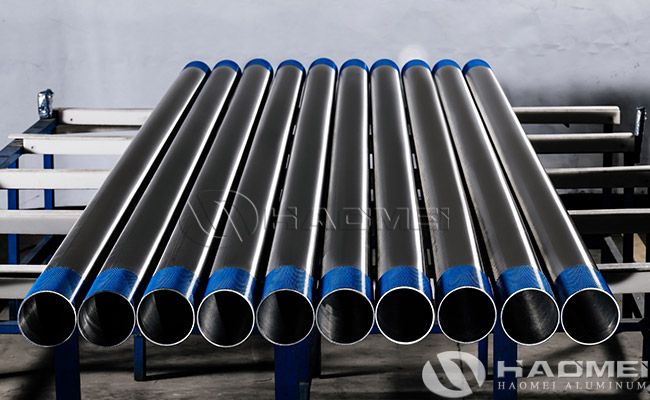
The core basis for ASME seamless pipes is the ASME BPVC Section II material specification. Our main grades, SA213, SA312, and SA789, strictly adhere to the stringent requirements of the specification regarding alloy materials, heat treatment, and non-destructive testing. Unlike ordinary steel pipe standards, their core advantage lies in "full-process safety control." From raw material selection to finished product delivery, every step must meet the requirements for high-pressure, high-temperature, and corrosion-resistant operating conditions. This is a mandatory "entry permit" recognized in the global high-end market and is the core product system in our export orders.
We focus on three core grades, covering austenitic, duplex, and super duplex alloys, precisely matching the needs of different export scenarios. Each product has a traceable material report and ASME certification. Below is a core product explanation from our sales communication team:
1. ASME SA213 stainless steel seamless pipe:
Primarily austenitic alloys (such as TP304 and TP316), while also including some heat-resistant alloys. Core applications include high-temperature equipment such as boiler superheaters, reheaters, and heat exchangers. The material strictly controls chromium and nickel content to ensure oxidation resistance and creep strength at high temperatures. For example, the TP304 grade has a tensile strength ≥515MPa, yield strength ≥205MPa, and grain size ≥6, suitable for high-temperature conditions above 400℃. It is a "standard necessity" for export orders in the power and chemical industries, currently mainly exported to power projects in Europe and Southeast Asia.
2. ASME SA312 stainless steel seamless pipe:
Primarily austenitic stainless steel seamless pipes, primarily used for transporting corrosive media, such as chemical acid and alkali pipelines and seawater desalination systems. This series of materials incorporates molybdenum, exhibiting excellent resistance to pitting and crevice corrosion. Wall thicknesses can be customized (SCH10-SCH160) to meet various pressure ratings. Our SA312 TP316L grade has been supplied in bulk to Middle Eastern petrochemical projects for the transport of corrosive media such as hydrochloric acid and sulfuric acid, and its stable corrosion resistance has resulted in long-term repeat purchases.
3. ASME SA789 stainless steel seamless pipe:
Covering duplex and super duplex alloys (such as 2205, 2507/UNS S32750), this series represents a core growth point in the high-end export market. Duplex steels combine the high strength of ferritic steel with the corrosion resistance of austenitic steel. Super duplex steels (such as 2507), by increasing the chromium, molybdenum, and nitrogen content, achieve a PREN value (pitting resistance equivalent) ≥40, tensile strength ≥800MPa, and yield strength ≥550MPa. They can withstand harsh environments such as seawater and high concentrations of chloride ions, and are mainly used in deep-sea oil and gas, nuclear power, and high-end chemical industries. Currently, our SA789 2507 series has been exported to European offshore platforms, replacing traditional austenitic steel pipes and extending their service life by 3-5 times.
ASME VS ASTM Seamless Pipes:
Overseas customers often confuse ASME and ASTM seamless steel pipes. As an stainless steel seamless pipe manufacturer, we help you clearly distinguish between them, accurately match customer needs, and avoid selection errors.
- From a standard perspective
ASME seamless pipes emphasize "safety and compliance," primarily targeting high-pressure, high-risk equipment such as boilers and pressure vessels. They must strictly comply with the ASME BPVC specification, emphasizing structural integrity and long-term service safety, and are a mandatory requirement for high-end projects.
ASTM seamless steel pipes, on the other hand, focus more on "material properties," specifying only material composition, dimensional tolerances, and basic properties. They are general material standards without mandatory safety certification requirements, making them more suitable for ordinary industrial applications.
- In terms of technical requirements
ASME steel pipe standards are more stringent. For example, our SA789 duplex steel requires strict control of the ferrite phase ratio between 40% and 60%, and the SA213 series requires ultrasonic testing on each pipe, with chemical composition deviation controlled within ±0.02%. The heat treatment process must also strictly match the alloy type.
ASTM steel pipe requirements are relatively more lenient; dimensional tolerances and testing requirements are negotiable, some grades do not require individual testing, the alloy composition deviation range is wider, and they do not need to adapt to the special safety requirements of high-pressure, high-risk equipment.
- From the perspective of application scenarios and market value
ASME seamless steel pipes primarily cater to the demands of the high-end export market. For example, our SA789 2507 series is used in seawater desalination projects, and the SA213 series is supplied to EU power plant projects. They are widely used in nuclear power, deep-sea oil and gas, and high-end chemical industries, offering strong pricing power, priced 25%-40% higher than ASTM steel pipes of the same specifications. Furthermore, ASME certification is a prerequisite for entering the supply chains of top companies like Shell and BP, resulting in high customer repurchase rates.
ASTM seamless steel pipes, on the other hand, are more suitable for low- to mid-end general-purpose applications, such as ordinary pipeline transportation and civil engineering. While more affordable, the market is highly competitive, resulting in less room for price increases. They are more suitable for customers with bulk purchases, low budgets, and less stringent safety requirements.
The core value of ASME seamless pipes lies in "safety and compliance + high-end adaptability." Haomei Aluminum focuses on three core grades—SA213, SA312, and SA789—covering all categories of austenitic, duplex, and super duplex alloys. We provide full-process export support services. Choosing our ASME seamless steel pipes means choosing access to the global high-end market and stable, reliable quality assurance, helping you seize opportunities in the international market.