 Email:nydia@aluminumhm.com
 Whatsapp:8618137889531
 Wechat:+86-18137889531

Selecting the right stainless steel seamless pipe for marine applications is essential for safety, service life, and maintenance cost control. Marine environments are highly aggressive because of seawater, salt spray, humidity, temperature variation, and the risk of pitting or crevice corrosion. A suitable pipe material should offer strong corrosion resistance, reliable mechanical performance, and compliance with project standards.
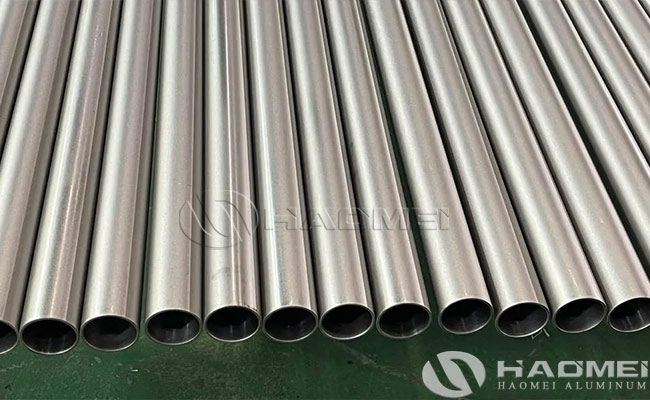
The first factor to consider is the service environment. If the pipe will be used in seawater cooling systems, ballast systems, desalination units, or offshore platforms, chloride resistance becomes critical. In such conditions, 316L stainless steel seamless pipe is one of the most commonly used grades for moderate marine exposure because it provides better corrosion resistance than 304 or 304L. However, in high-chloride or more demanding offshore conditions, Duplex 2205 seamless pipe is often a better option due to its improved pitting resistance, higher strength, and better resistance to stress corrosion cracking. For extremely harsh seawater environments, Super Duplex 2507 seamless pipe may be the preferred solution.
The second factor is pressure and mechanical strength. Seamless pipes are generally preferred in marine systems that require high pressure resistance, structural integrity, and reduced leakage risk. Compared with welded pipes, seamless pipes have a more uniform structure and are often selected for critical services such as hydraulic lines, heat exchangers, and offshore process piping. If the project requires high strength with reduced wall thickness, duplex and super duplex grades may provide both weight and performance advantages.
Third, buyers should verify applicable standards and certifications. Common specifications include ASTM A312, ASTM A269, ASTM A213, and EN 10216-5, depending on whether the product is pipe or tubing and the intended application. For shipbuilding and offshore projects, documentation is also important. Buyers may require EN 10204 3.1/3.2 certificates, PMI testing, hydrostatic testing, dimensional inspection, and third-party inspection reports. In some cases, marine projects may also require approvals or support for class society documentation such as DNV, ABS, LR, BV, or CCS.
Another key point is size, wall thickness, and surface quality. The pipe should match the project design in terms of outside diameter, wall thickness, schedule, and length. Surface finish is also important because defects, contamination, or poor handling may reduce corrosion resistance. Proper pickling, passivation, clean packaging, and full traceability should be considered when choosing a supplier.
Finally, it is important to evaluate supplier capability. A reliable supplier should provide stable raw materials, consistent quality control, export packing, complete mill test certificates, and clear lead time support. For marine projects, technical support in material selection can also help reduce project risk.
So, choosing stainless steel seamless pipe for marine applications depends on corrosion resistance, strength, standards, certification, and supplier reliability. For general marine service, 316L is widely used; for more demanding seawater systems, Duplex 2205 or Super Duplex 2507 may be more suitable. The right choice helps ensure long-term performance and lower lifecycle cost.