 Email:nydia@aluminumhm.com
 Whatsapp:8618137889531
 Wechat:+86-18137889531

Shipbuilding requires materials that can withstand harsh marine environments, including saltwater exposure, humidity, temperature changes, and mechanical stress. Stainless steel is widely used in shipbuilding because of its corrosion resistance, strength, durability, and low maintenance requirements. However, not all stainless steel grades are equally suitable for marine applications. Choosing the right stainless steel grades for shipbuilding depends on the service environment, system design, and cost considerations.
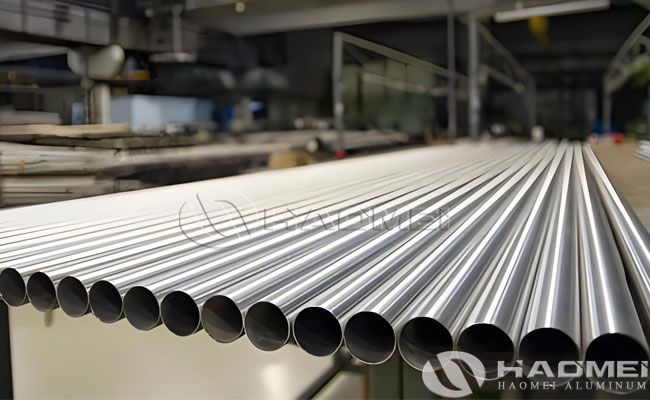
Ships and offshore structures operate in highly corrosive conditions. Seawater contains chlorides that can cause pitting, crevice corrosion, and stress corrosion cracking in unsuitable materials. Stainless steel is often selected for piping systems, seawater cooling lines, ballast systems, hydraulic tubing, exhaust components, and deck equipment because it offers a good balance of corrosion resistance and mechanical performance.
304 and 304L are common austenitic stainless steel grades used in many industrial applications. They offer good corrosion resistance and formability, but their performance in direct seawater exposure is limited. In shipbuilding, 304/304L may be used for interior structures, freshwater systems, or less aggressive environments where chloride exposure is low. For critical seawater systems, they are usually not the first choice.
316 and especially 316L are among the most widely used stainless steel grades for shipbuilding. Compared with 304, 316L contains molybdenum, which improves resistance to pitting and crevice corrosion in chloride-containing environments. This makes it a popular choice for marine piping, deck fittings, tanks, and equipment exposed to moist or mildly corrosive seawater conditions. 316L also has good weldability and is commonly used in seamless pipe and tube applications.
321 stainless steel is a titanium-stabilized austenitic grade known for good resistance to intergranular corrosion after welding. It is often used in applications involving elevated temperatures, such as exhaust systems, heat exchangers, and thermal equipment on ships. While it offers some advantages in high-temperature service, it is not typically chosen for prolonged seawater exposure over 316L or duplex grades.
Duplex 2205 is a highly suitable grade for demanding shipbuilding and offshore applications. It combines high strength with excellent resistance to chloride stress corrosion cracking, pitting, and crevice corrosion. Because of these properties, 2205 is commonly used in seawater piping systems, ballast water lines, cargo tanks, and offshore structures. Its higher strength can also allow for reduced wall thickness in some designs, helping optimize weight and cost.
For extremely aggressive marine environments, Super Duplex 2507 offers even better corrosion resistance than 2205. It is designed for severe chloride exposure and is often used in seawater handling systems, desalination units, offshore platforms, and critical marine components. Although it is more expensive, it performs exceptionally well in high-chloride and high-pressure conditions.
In shipbuilding, material selection should consider corrosion resistance, mechanical strength, operating temperature, fabrication needs, and project budget. For mild marine environments, 316L may be sufficient. For direct seawater service or more demanding systems, Duplex 2205 or Super Duplex 2507 are often better choices.
The most suitable stainless steel grades for shipbuilding commonly include 316L, 321, Duplex 2205, and Super Duplex 2507, while 304/304L may be used in less corrosive areas. The right choice depends on the application and service conditions. For critical marine systems, selecting the proper stainless steel grade is essential for safety, durability, and long-term performance.