 Email:nydia@aluminumhm.com
 Whatsapp:8618137889531
 Wechat:+86-18137889531

Manufacturing Process | How Stainless Steel Seamless Pipes Are Made
The production of stainless steel seamless pipes requires careful control of multiple manufacturing stages. Each stage affects final product quality, including dimensional accuracy, surface condition, mechanical properties, and corrosion resistance.
Our manufacturing process is structured to support stable production and reliable product performance for marine, offshore, and industrial applications.
Stainless Steel Seamless Pipe Manufacturing Process
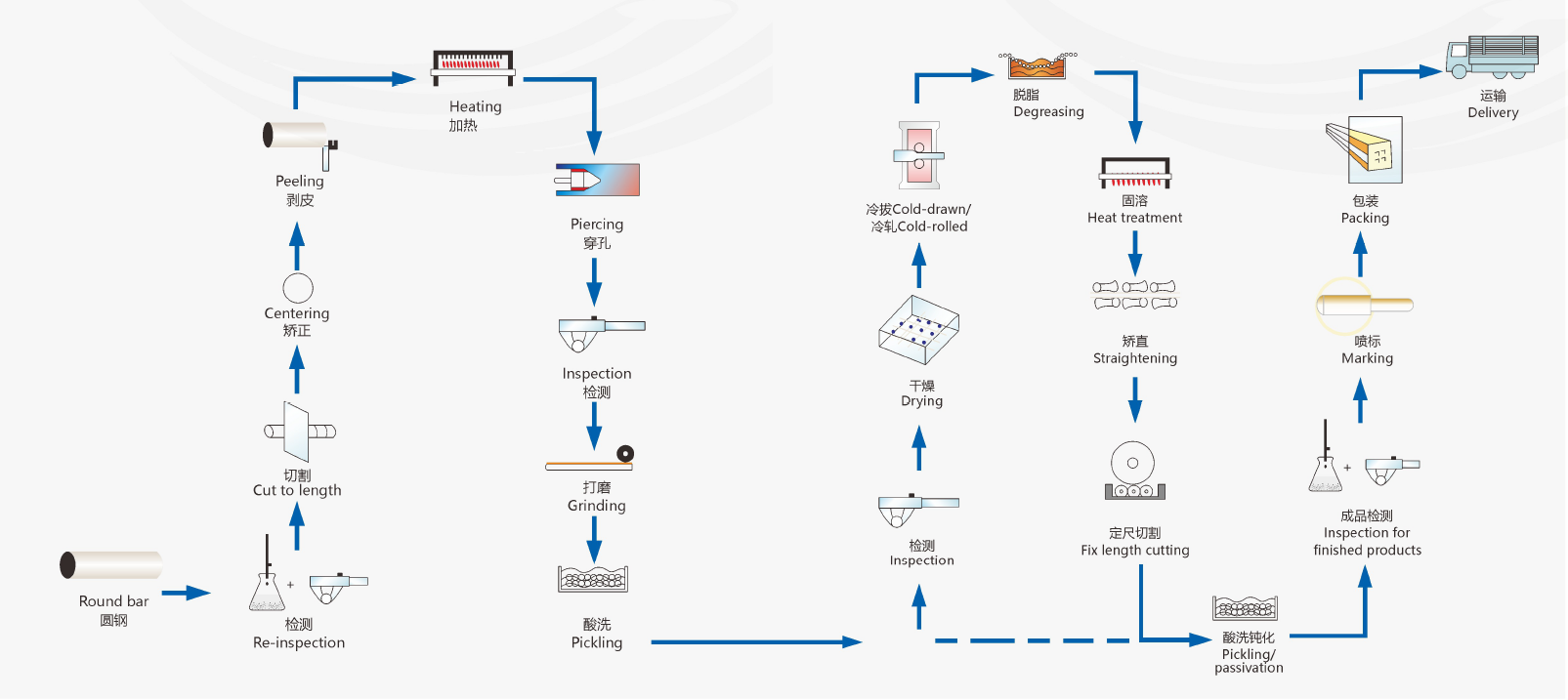
1. Raw Material Selection
The process begins with the selection and verification of raw material. Material identity, heat number, and basic chemical conformity are checked before production starts.
2. Billet Preparation
Billets are prepared for further processing through cutting and initial inspection. Proper billet condition is important for stable forming performance.
3. Piercing and Forming
The solid billet is pierced and formed into a hollow section. This is one of the key stages in the production of seamless pipes.
4. Hot Rolling or Cold Processing
Depending on the required specification, the pipe may go through hot rolling, cold drawing, or cold rolling to achieve the target size, wall thickness, and dimensional tolerance.
5. Heat Treatment
Heat treatment, such as solution annealing, is carried out when required to restore the proper metallurgical structure and support corrosion resistance and mechanical performance.
6. Straightening
After forming and heat treatment, the pipe is straightened to improve geometric consistency and handling performance.
7. Surface Treatment
Processes such as pickling and cleaning are used to improve surface condition and remove oxide scale or processing residue.
8. Cutting and Finishing
Pipes are cut according to required lengths and prepared for the next stage of inspection and marking.
9. Inspection and Testing
Dimensional inspection, visual inspection, and other required tests are conducted before final release.
10. Marking and Packing
Final products are identified with specification and traceability information before packing for shipment.
Heat Treatment and Surface Finishing
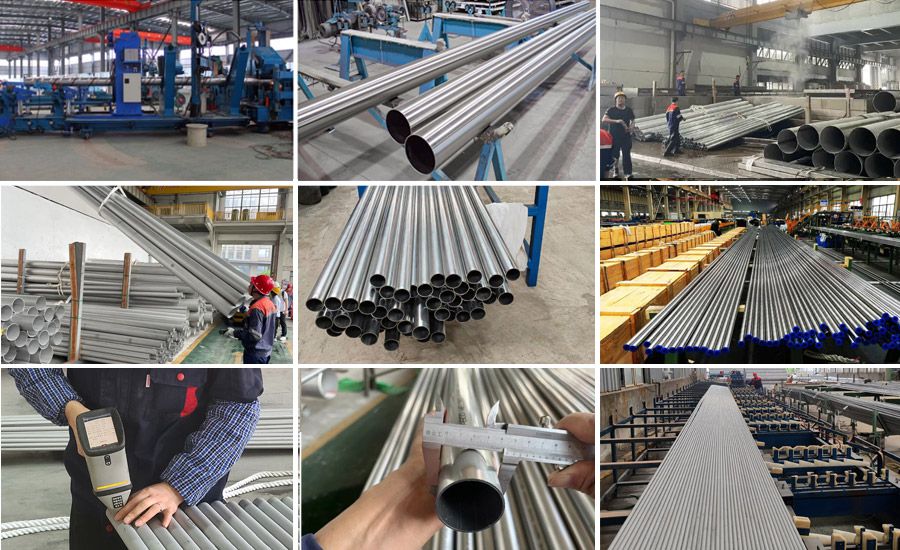
Heat treatment plays an important role in stainless steel seamless pipe production, especially for maintaining proper metallurgical structure and corrosion resistance. Controlled heat treatment helps ensure that the material performs as expected in demanding service environments.
Surface finishing is also important. Pickling and cleaning help improve surface quality and prepare the pipe for final inspection, marking, and use.
Dimensional and Process Control
Throughout the manufacturing process, dimensional control and process monitoring are applied to help maintain product consistency. Depending on the specification, we pay attention to:
outside diameter
wall thickness
straightness
length tolerance
surface condition
end condition
marking accuracy
Consistent control at each stage helps reduce variation and supports compliance with customer and standard requirements.
Final Inspection and Product Identification
Before shipment, finished pipes go through final inspection and product identification procedures. This stage helps confirm that the products match the required grade, dimensions, quantity, and applicable documentation.
Traceability is maintained through heat number marking and document matching, which is especially important for marine, offshore, and pressure-related projects.
Process Advantages
A controlled manufacturing process helps us support customers with products that offer:
reliable dimensional consistency
stable mechanical performance
suitable surface condition for industrial use
improved traceability and inspection readiness
practical support for international project requirements